
How much sushi rice per person? Calculate it exactly here
Does this sound familiar? You want to make sushi for your family or friends, but you have no idea how much rice you’ll need. Too little rice and your guests will go hungry. Too much, and you’ll end up throwing away expensive sushi rice….what a waste! With my free Sushi Rice Calculator ©, I’ll help you tackle that challenge! Whether you’re making hosomaki, uramaki, temaki, nigiri, or gunkan: with just one click, you’ll instantly know how much rice, water, and sushi vinegar you need. Have fun with it!
Sushi Rice Calculator寿司飯の計算
Work out exactly how much rice, water, and sushi vinegar (sushi-zu) you need. No waste, perfectly balanced rice, every single time.
Sushi-zu · seasoning
fold through warm riceWant to truly master it, from the rice to the perfect roll?
View the online courseHow much rice for each type of sushi?
| Type of sushi | Per | Uncooked rice |
|---|---|---|
| Hosomaki | nori sheet (roll) | 36 g |
| Uramaki | nori sheet (roll) | 50 g |
| Temaki | hand roll | 23 g |
| Nigiri | piece | 8 g |
| Gunkan | piece | 7 g |
| Sushi dinner | person | 125 g |
Tip: Uncooked sushi rice nearly triples in weight. 100 grams of dry rice yields about 240 grams of cooked rice. So use the uncooked amount when shopping, and the cooked amount when rolling.
How to Make Sushi Rice: Step by Step
Good sushi starts and ends with the rice. While the filling gets all the attention, it’s the rice that makes the difference between homemade sushi and high-quality sushi. Here’s how to make it perfect:
- Rinse. Rinse the sushi rice under cold water until the water runs clear. This washes away the excess starch, preventing the rice from turning into a sticky mess later on.
- Soak. Drain the water and let the rice soak in fresh water for another 30 minutes. The grains will absorb moisture, allowing them to cook evenly.
- Cook. Cook the rice with the specified amount of water until the water has been absorbed, about 10 minutes.
- Steam. Remove the pot from the heat and let the rice steam for another 15 minutes with the lid on. Don’t stir it, and don’t peek.
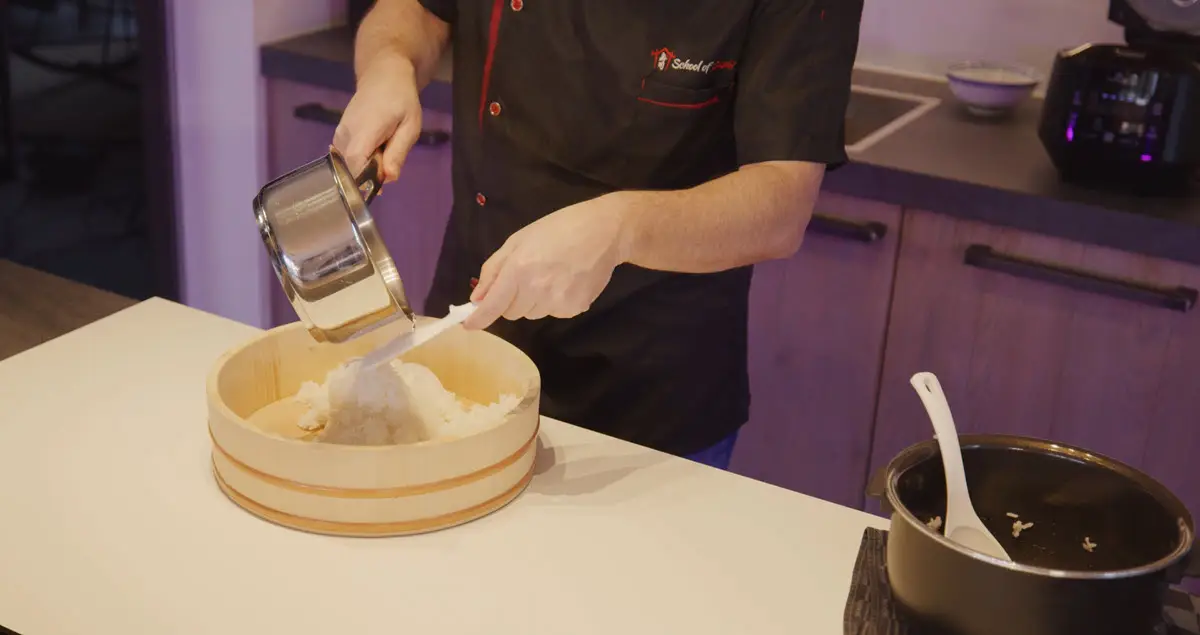
- Season. Meanwhile, dissolve the sugar and salt in the rice vinegar. Fold this into the still-warm rice using short, cutting motions, so that each grain of rice is glossy.
- Cool. Let the rice cool completely to room temperature before you start making sushi.
The right ratio of sushi vinegar (sushi-zu)
Sushi vinegar is the vinegar mixture that gives sushi rice its characteristic fresh, slightly sweet flavor. Getting the balance right is crucial. As a guideline, for every 100 grams of uncooked rice, I use about 20 ml of rice vinegar, 12 grams of sugar, and 3 grams of salt. The calculator above automatically calculates this for you, in grams as well as in tablespoons and teaspoons. Give it a try and see if you and your guests like it…and adjust it if your taste buds tell you to. Every (home) chef has their own taste!
Frequently Asked Questions
Allow about 125 grams of uncooked rice per person for a full meal. For a light appetizer, 60 to 75 grams per person is sufficient.
Uncooked sushi rice becomes about 2.4 times as heavy after cooking. So 125 grams of dry rice yields about 300 grams of cooked rice per person.
Always use Japanese short-grain rice (sushi rice). It contains enough starch to stick together nicely without becoming mushy. Risotto, basmati, or pandan rice won’t work.
It’s best to make it the same day. Store the cooled sushi rice, covered, at room temperature and use it within a few hours. If you put it in the fridge, the rice will become hard and grainy.
Do you want to really master the art of making sushi?
Getting the rice ratio right is the first step. The right cutting technique, rolling, shaping the nigiri, and choosing your fish are what make it perfect. In the School of Sushi online course, I’ll teach you, step by step, everything you need to know to make restaurant-quality sushi at home.
The most comprehensive online sushi course →