



Sushi Wiki
The 10 best rice cookers for the perfect sushi rice in 2025
Discover the 10 best rice cookers for perfect sushi rice! From Zojirushi to Yum Asia, I tell you which one is best for your budget.

Home » Sushi without soul: our experience at Sushi Kotobuki in Brisbane, Australia
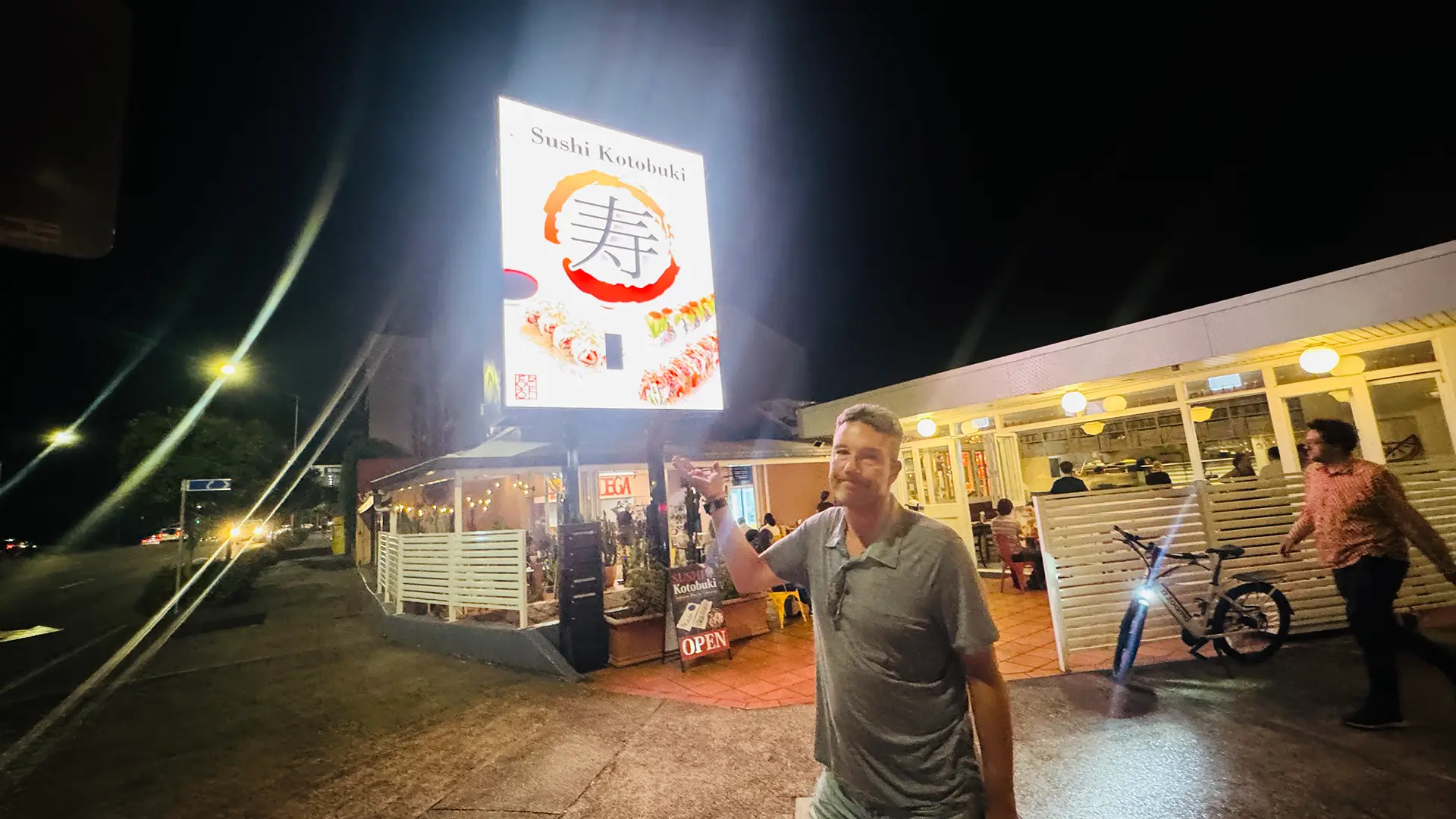
Sometimes you have those evenings where everything just clicks. You’re in the mood for a delicious plate of amazing sushi, you find a restaurant with great Google reviews, and you’re looking forward to a relaxed and enjoyable dinner. This was supposed to be one of those evenings. But unfortunately, things turned out completely differently for us at Sushi Kotobuki.
What started out as a promising sushi night ended in disappointment. And that’s exactly why I think this story is worth sharing. Not to bash the place, quite the opposite, but to highlight something much more important: good sushi is all about attention, love, and respect for the ingredients.
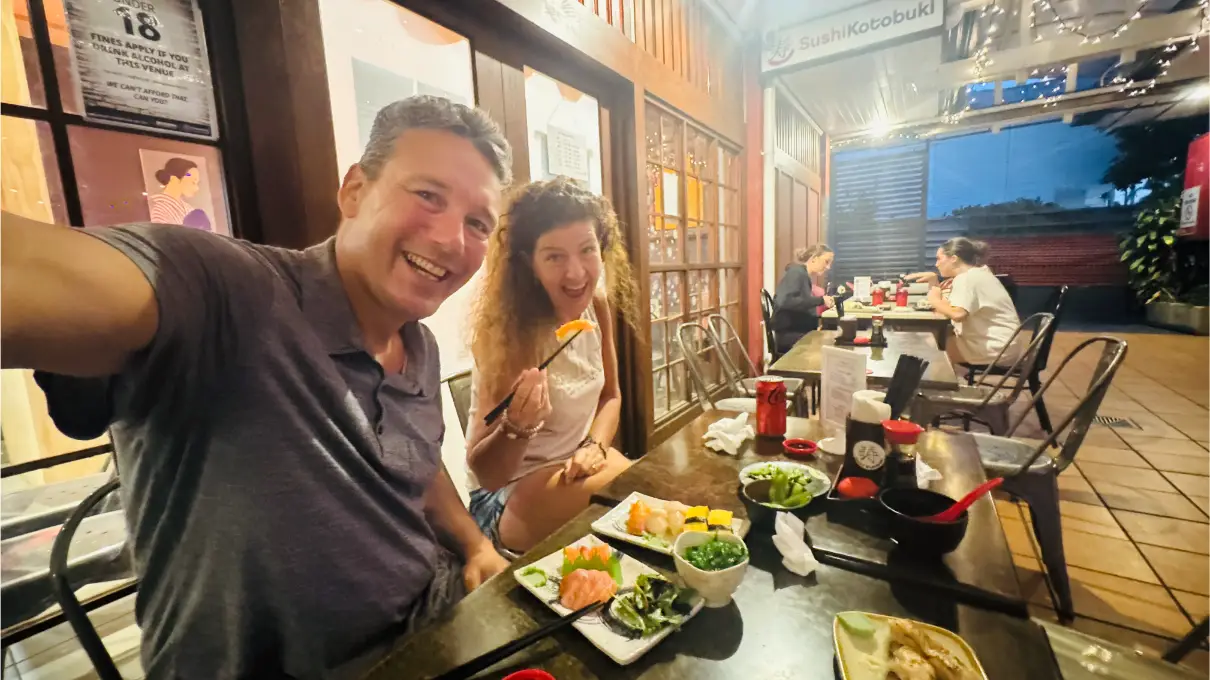
As I mentioned, we were in the mood for a laid-back evening. Just some good food, spending some quality time together, and taking our time in beautiful, laid-back Brisbane in our beloved Australia. Based on the many positive Google reviews, we decided to go to Sushi Kotobuki. The restaurant was also within easy walking distance of our hotel. In short: it felt like a safe and logical choice. After all, so many people can’t be wrong, can they?
Actually, yes.
The welcome was lukewarm from the moment we arrived. We asked for a table for two, and the woman behind the counter just pointed to the free tables outside and told us in a bored tone to “just pick a table”…. A bit of a shame…..but okay.
When we got to the table, we found out we had to order using a QR code. That’s standard practice these days, but it immediately takes away part of the experience. No contact, no advice, no interaction. Absolutely nothing. I really don’t like that at all.
So we kept it simple, because I had no idea what kind of quality they could offer. So I ordered a few pieces of nigiri, some sashimi, an uramaki roll, and a few small side dishes. And, of course, miso soup. Ever since I visited Japan, that’s become a staple starter.
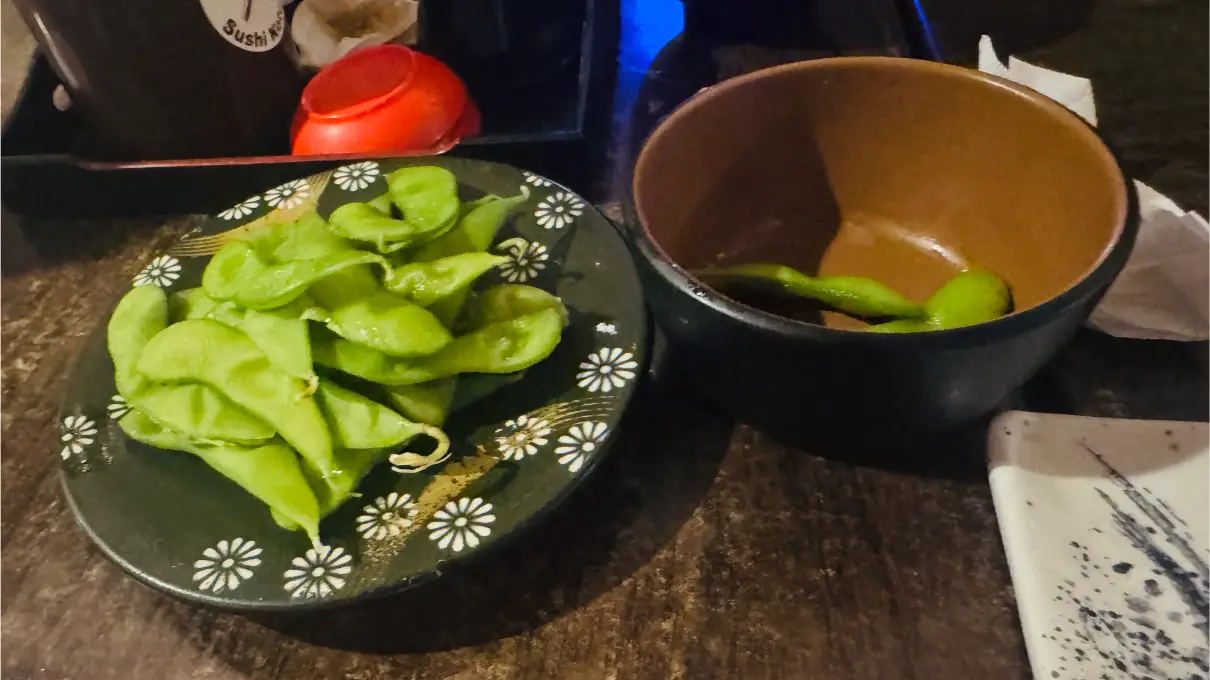
The miso soup was fine. Warm, light, and just right. The wakame salad was okay, too.
But then came the edamame. They were… bland. No salt, no flavor, no character. Just heated up and served. That’s a shame, because even something as simple as edamame can be amazing with just a little care.
En daar begon het gevoel al te knagen.
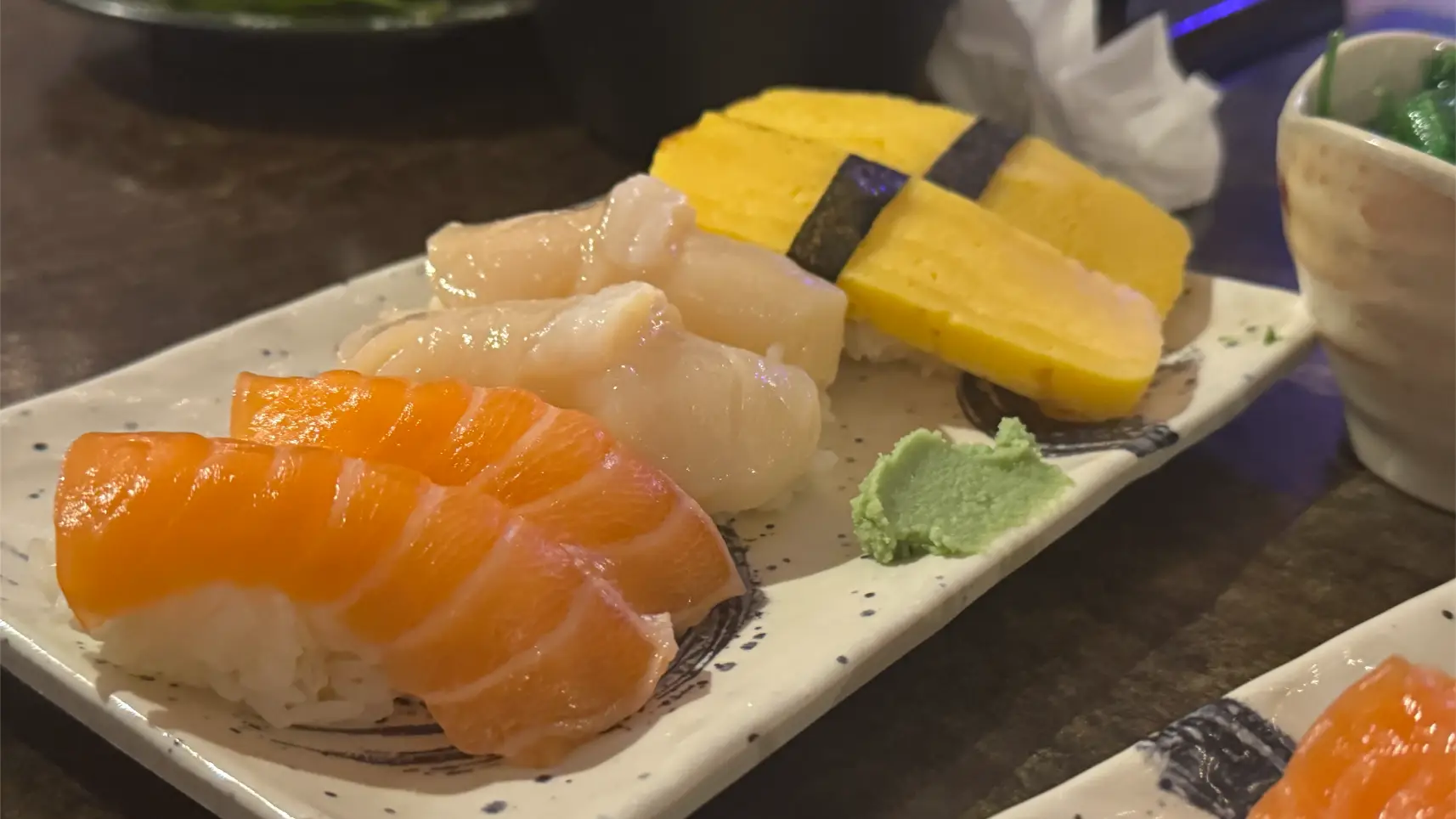
Then came the nigiri. And that’s when things really went wrong. We always order salmon nigiri. Corinne loves salmon, and I really appreciate a good piece of salmon too. Especially in beautiful Australia, where the quality of salmon is often exceptionally high. So this should have been a sure thing.
But nothing could be further from the truth. The salmon itself was bland. That can happen. But the rice… that was truly awful. Hard, dry, and completely tasteless. As if it had been sitting there for hours, maybe even a day. It tasted of nothing.
We looked at each other in surprise.
Are we in the right place? We took another look at the logo. Yes, this is Kotobuki. We even checked the Google reviews again. But yeah, this really was the place.
Then came the question every sushi chef must ask themselves: have you tasted your rice? The answer here was crystal clear: no. I can’t imagine that the sushi chef on duty had tasted this rice, because if they had, they would never have served it.
And that’s a fundamental mistake. Because sushi begins and ends with rice. That’s the foundation of any good sushi. That’s the first thing you learn in a Japanese sushi kitchen.
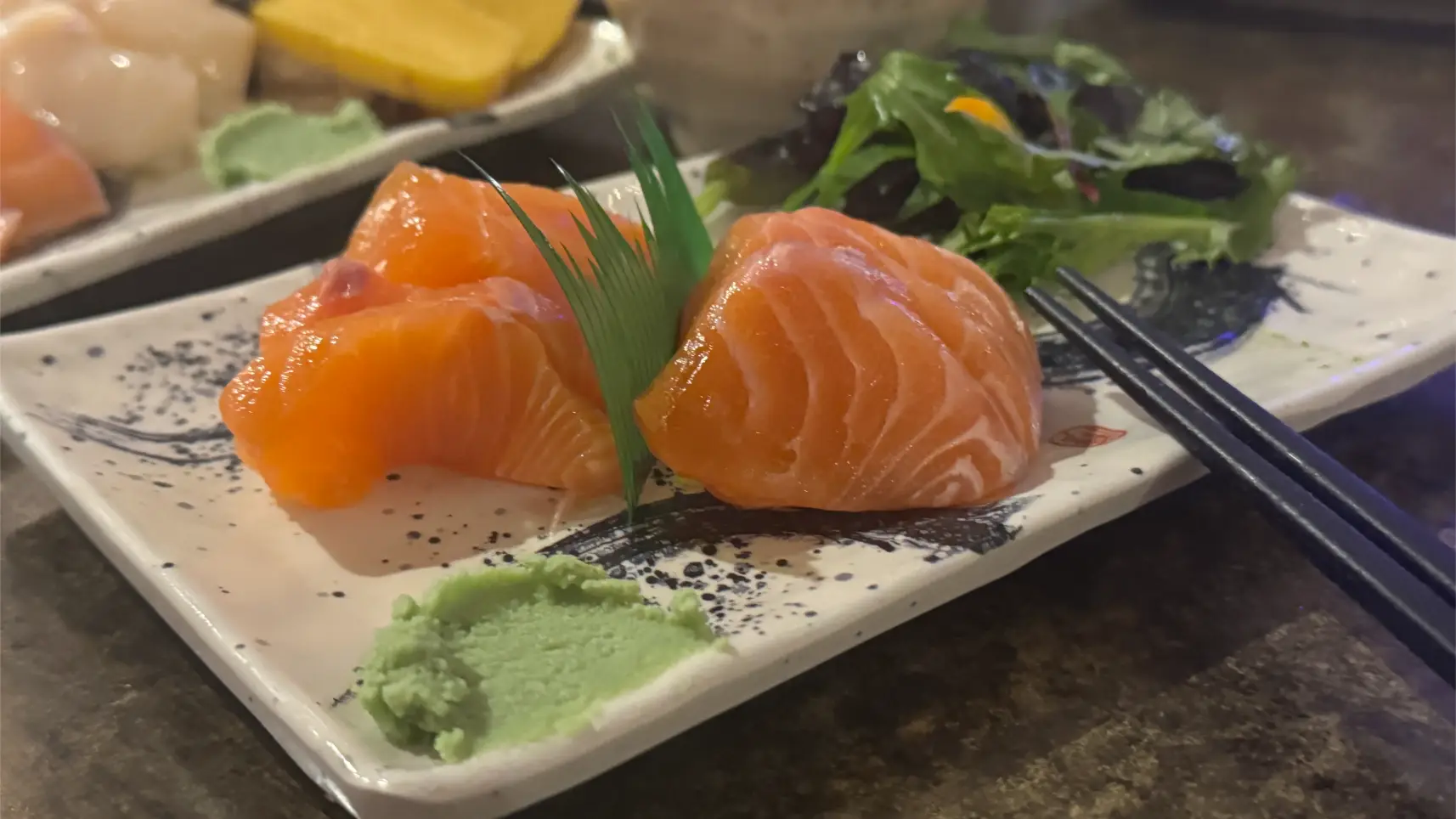
Next came the sashimi. At first glance, it was already a bit of a letdown. Two rows of salmon, not even neatly arranged, separated by a thin green plastic sheet. Next to that, there was some mixed lettuce tossed onto the plate and a dollop of wasabi.
No presentation. No finesse. No respect whatsoever.
Sashimi should be pure. Minimalist, yet executed to perfection. Every slice must be carefully cut. Every detail must be just right.
Everything was missing here. The taste confirmed the impression. Just as flat as the nigiri. No depth, no freshness. Just… boring.
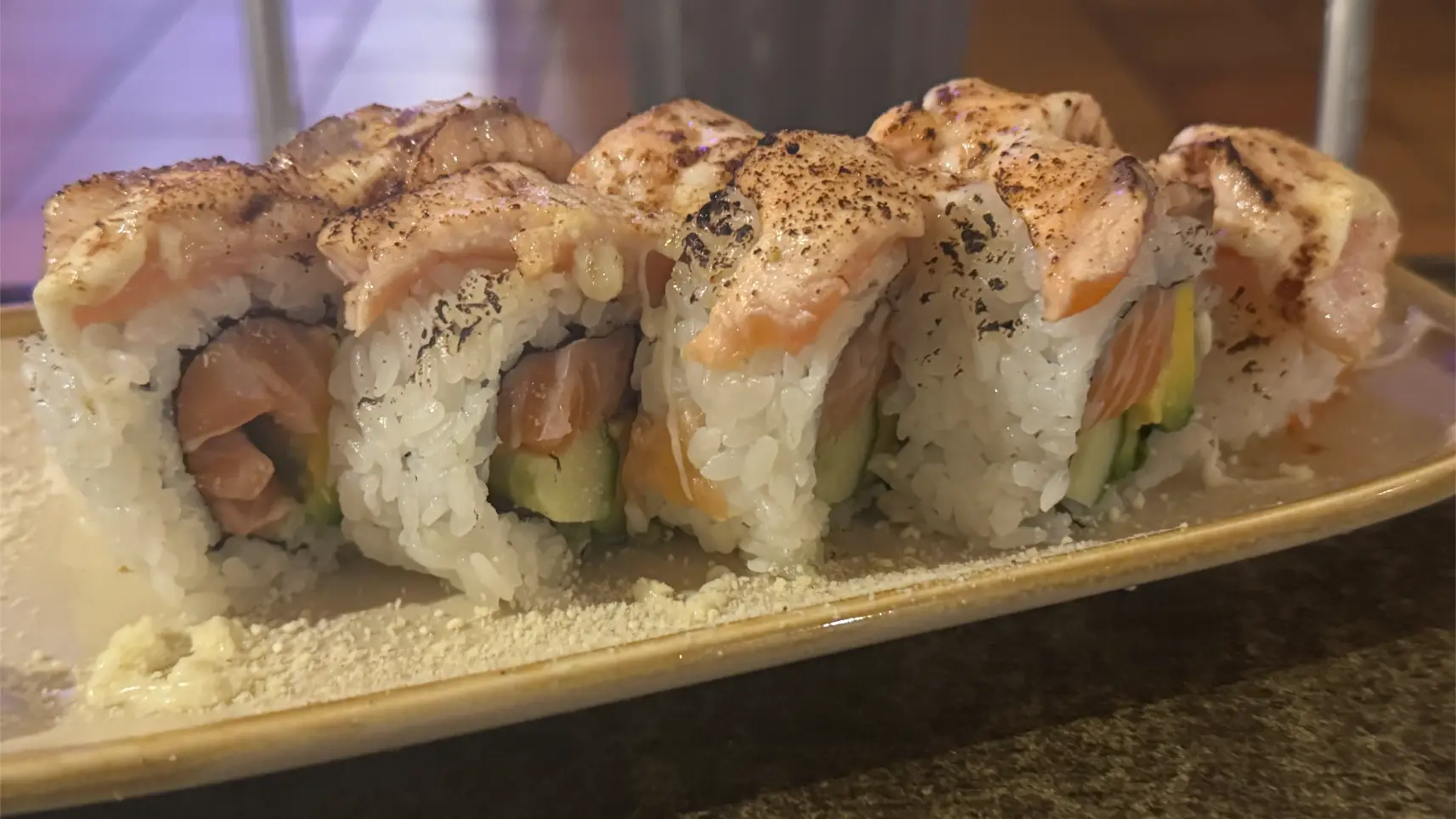
Then came the uramaki roll. And this should have been the moment when everything was made up for. Or so we hoped… but unfortunately.
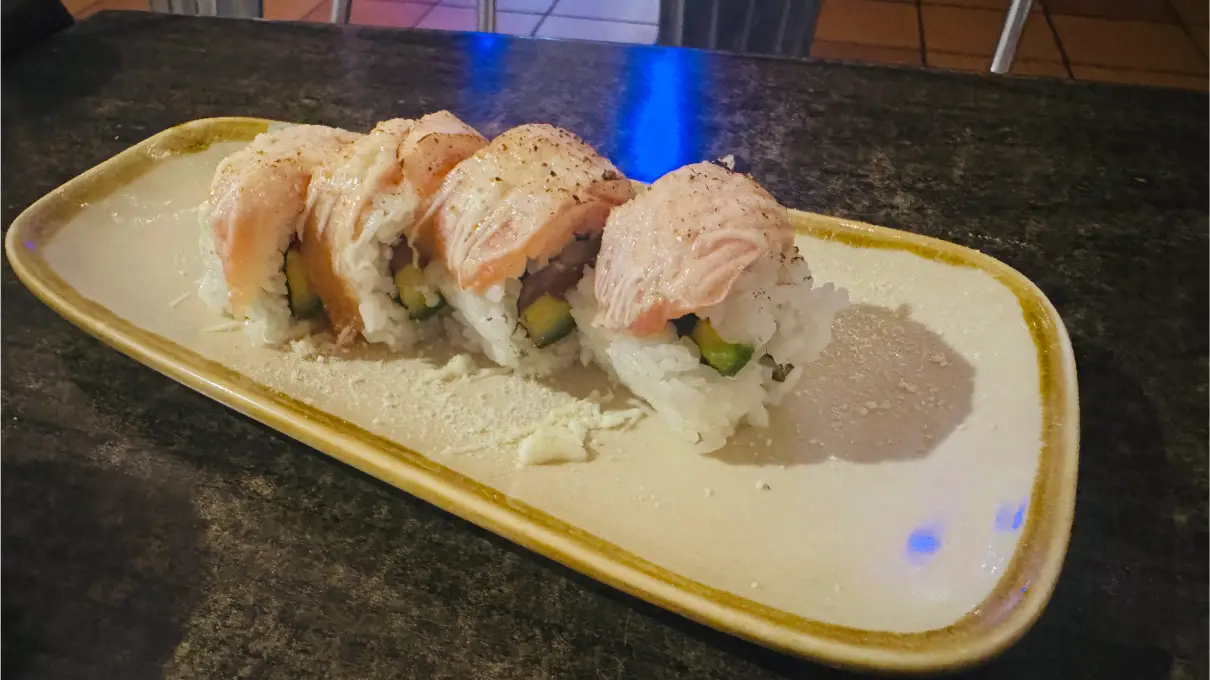
The roll was placed on the table, and we saw right away: it was way too thick. The layer of rice was enormous. The proportions were completely off. On top of that, not a single piece was cut evenly.
The sides were sloppy and not at all neatly finished, just as I always explain to the participants in my sushi course. The rice was spilling out everywhere, which made the whole roll look incredibly messy.
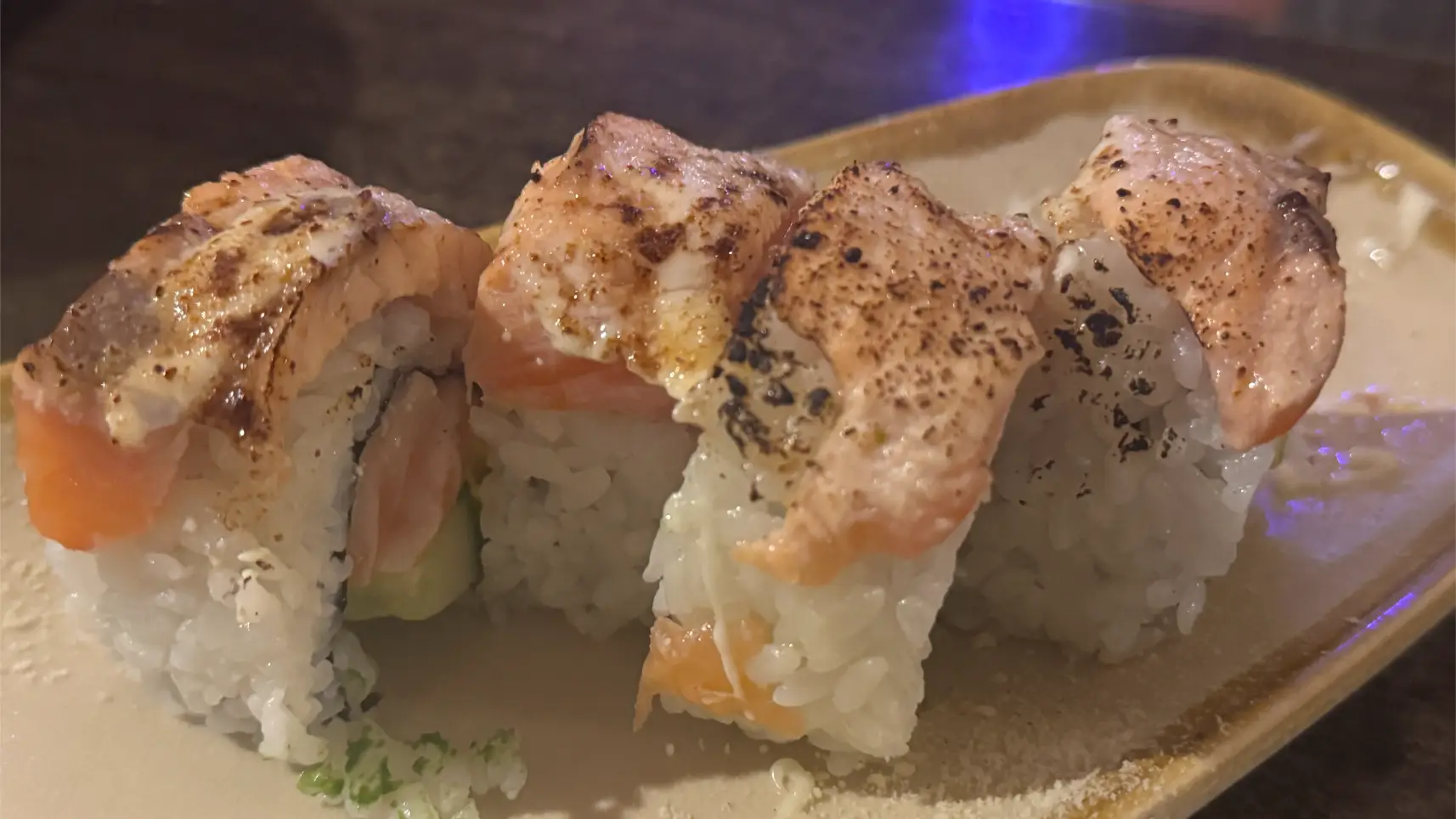
But the worst was yet to come. The salmon on top wasn’t lightly flambéed. It was burnt. Really burnt. Not subtly, but harshly and bitterly.
Flambing is an art. That’s something you quickly learn the first time you try it. It has to be done quickly, with control, and with great precision. After all, you want to add flavor without destroying the ingredient, and, by extension, the entire sushi.
Unfortunately… Here, exactly the opposite had happened.
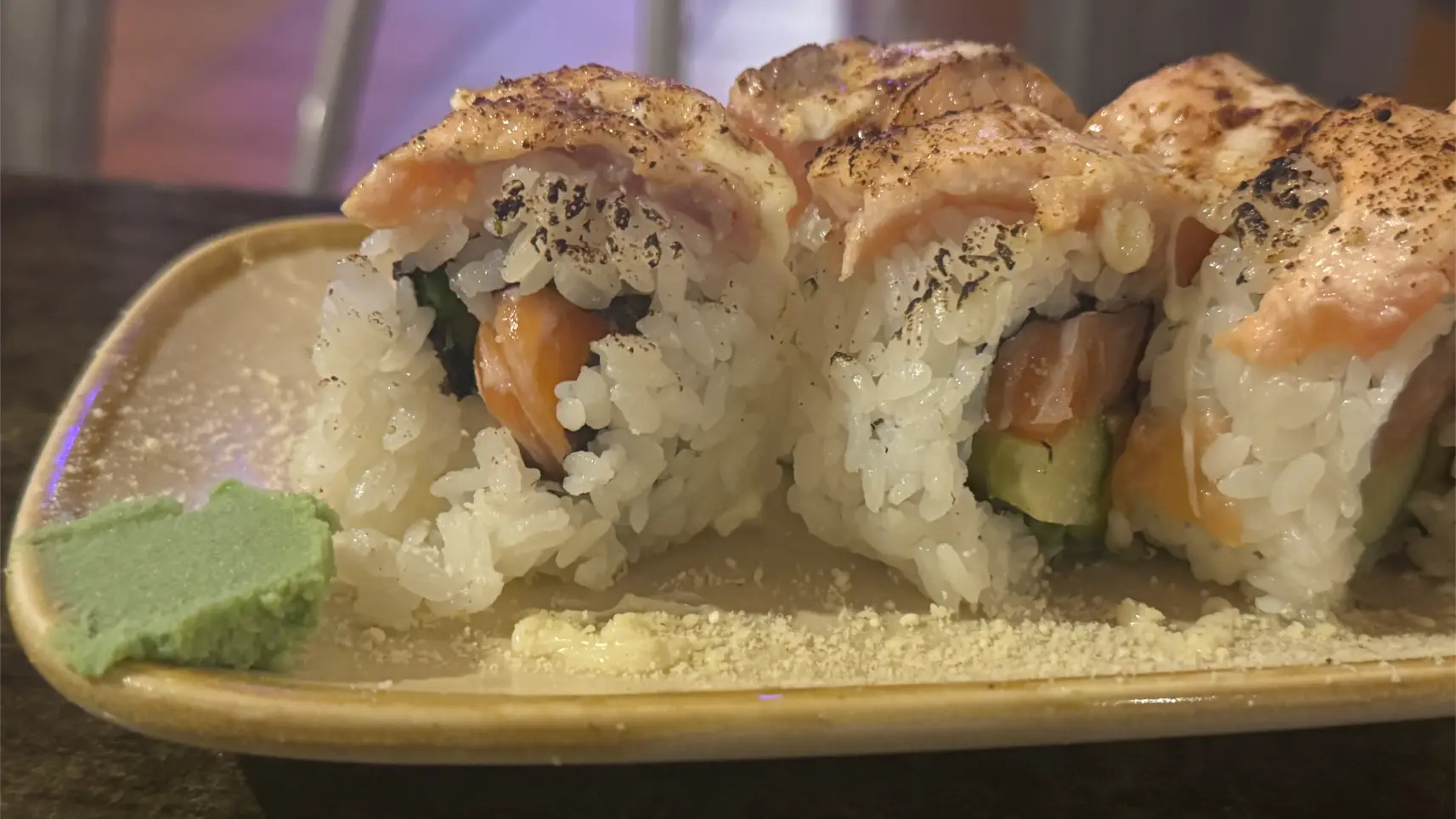
We decided to send half the roll back. We don’t usually do that, but this one was simply no good.
We were quickly served four new portions. The waiter remarked that “the rice might burn when flambéed”… Instead of an apology, or “I’m sorry that’s inconvenient for you.” No, just that it can happen…
That’s just not true. Anyway, we wanted to give it another chance.
Unfortunately, the new pieces weren’t any better. They were once again cut sloppily. Once again, the finishing touches were completely lacking. And the love… that was truly nowhere to be found. How do you manage that as a chef?
At that point, it was clear, so of course we didn’t order anything else. Instead, we walked back to the hotel and picked up a bag of chips on the way. That pretty much says it all.
Wat een mooie avond had moeten worden, eindigde in gigantische teleurstelling.
This isn’t just about one restaurant. This is about something bigger. Sushi isn’t fast food. It’s a craft. An art form. I felt and experienced that in Japan. It’s a culinary art form to be proud of.
And yes, good ingredients are important. But that’s just the foundation. Without care and love, it won’t amount to anything.
During my sushi workshops, I always say the same thing: “Work calmly. Always taste. Feel. Show respect for every ingredient.”
Cut the roll neatly. Make sure each piece is the same size. Press the sides firmly. Arrange it neatly on the plate.
Dat kost misschien een paar seconden extra. Maar het maakt een wereld van verschil.
If there’s one thing I want to share with everyone, it’s this: Always taste your rice.
Rice is the heart of sushi. If it’s not right, nothing else can save it. The right balance of sour, sweet, and salty. The right texture. Not too hard, not too soft. You should be able to taste each grain distinctly.
Dat is de basis. Altijd.
What we missed at Sushi Kotobuki was heart. No attention. No care. No pride. And you can taste that right away.
Good sushi feels different. It looks different. It tastes different. You can tell when someone has put time, love, and energy into it.
That’s exactly what I try to convey in my workshops. It’s not just about techniques, but mainly about mindset. Anyone can make sushi. With a little practice, you can go a long way.
But truly good sushi? That takes passion. You have to want to improve. You have to be critical. You have to keep tasting. And above all: you have to enjoy it. Because without enjoyment, it becomes routine. And without attention to detail, it becomes sloppy. That’s what we saw happening here. And that’s a real shame for us as customers.
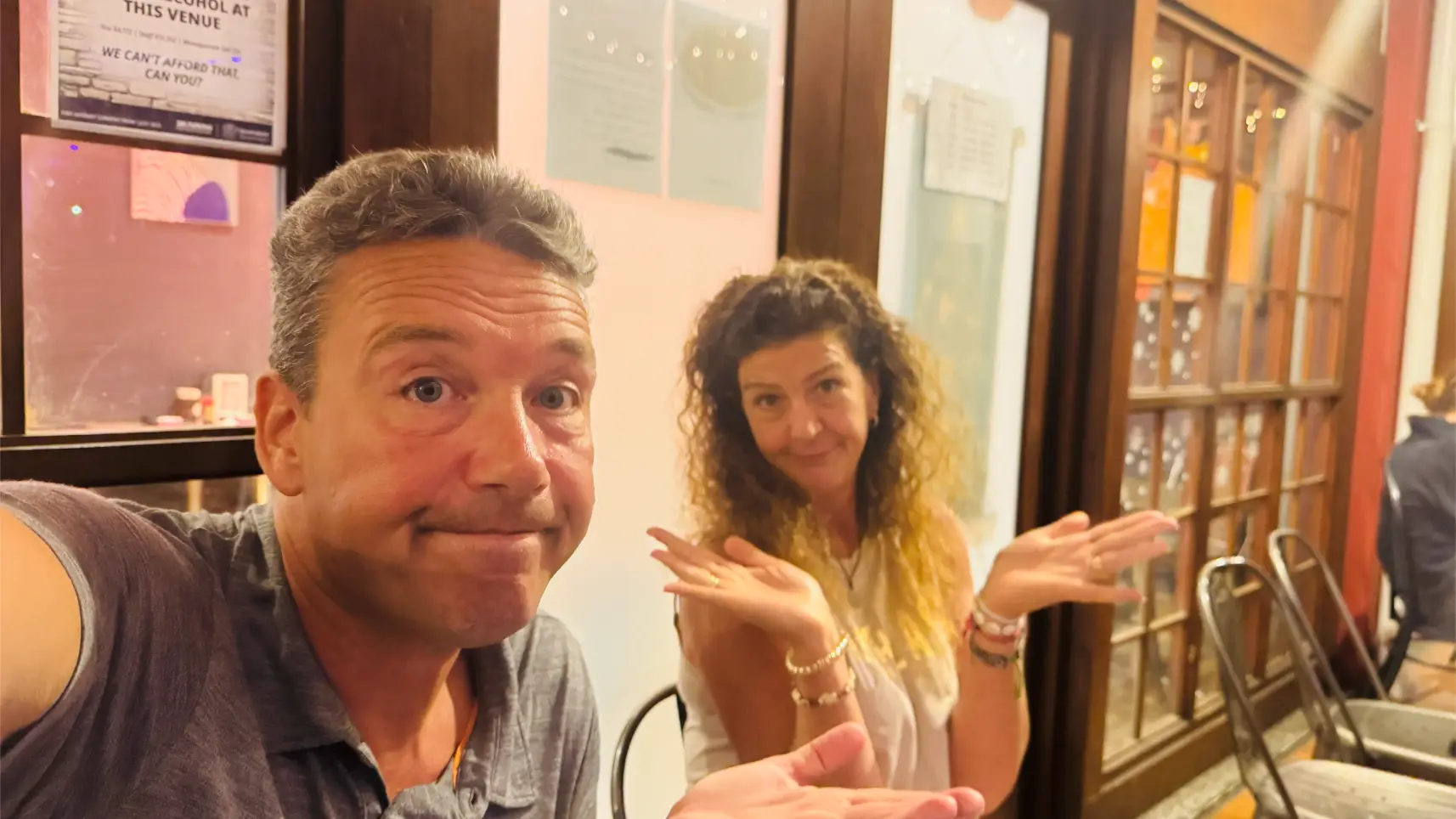
We don’t give out bad reviews very often. In fact… I rarely post a review lower than 3.5 stars. I like to have a positive outlook on life, which is why I prefer to share reviews of sushi restaurants that make me happy. But to be fair, in this case, it was crystal clear to me where the issues lay, and I’d like to pass on this valuable lesson to anyone who enjoys making sushi:
Because when I add it all up, I can only come to one conclusion… My final rating: 1 star.
This ruined our evening. And it was a waste of our money. But more importantly, it was a missed opportunity. Because with just a little care and attention, this could have been a completely different experience for us.
Don’t let this be a negative story, but rather a source of inspiration. Making sushi is fun. It’s creative. It’s relaxing. You make sushi for your customers, for your family, for your friends. Respect them. So take your time. Work neatly. Taste everything. Absolutely everything.
And above all: Make the sushi with love, with a passion for your guests. Because that’s what you’ll ultimately taste. I hope the Kotobuki team in Brisbane rediscovers that passion and love… for themselves and for all their guests.

Sushi chef and founder of the School of Sushi. Making your own sushi is easier and more fun than you think! Through workshops and online courses, I’ll show you how to roll delicious sushi for your friends & family. Ready to roll?


Discover the 10 best rice cookers for perfect sushi rice! From Zojirushi to Yum Asia, I tell you which one is best for your budget.

Dive into Australia’s sushi scene with Top 10 Most Popular Sushi in Australia. Grab your chopsticks and explore what’s hot Down Under!

You need special rice to make sushi. I tell you what sushi rice you need, which brands are best and what to look out for.

Dutch Wasabi: Fresh and locally grown in the Netherlands. Perfect for any sushi chef! I paid them a visit and was stunned!
Looking back on our world trip: Japan, Vietnam, Australia, and Vanuatu. Culinary adventures, lessons learned, setbacks, and an unexpected return to the Netherlands.

We tested Chocolate Buddha at Fed Square in Melbourne. From miso soup to Buddha’s Fire sushi roll: read our honest review right here!


Master the art of sushi-making at home with my fun online course, featuring 50+ step-by-step videos, expert tips, and delicious recipes to impress your loved ones!