



Japanese Knives
The 5 best electric knife sharpeners for Japanese knives in 2025
Discover the 5 best electric knife sharpeners of 2025 for Japanese knives! Sharpen your Yanagiba and Santoku and slice sushi like a pro!

Home » All types of sushi explained: From Nigiri to Temaki
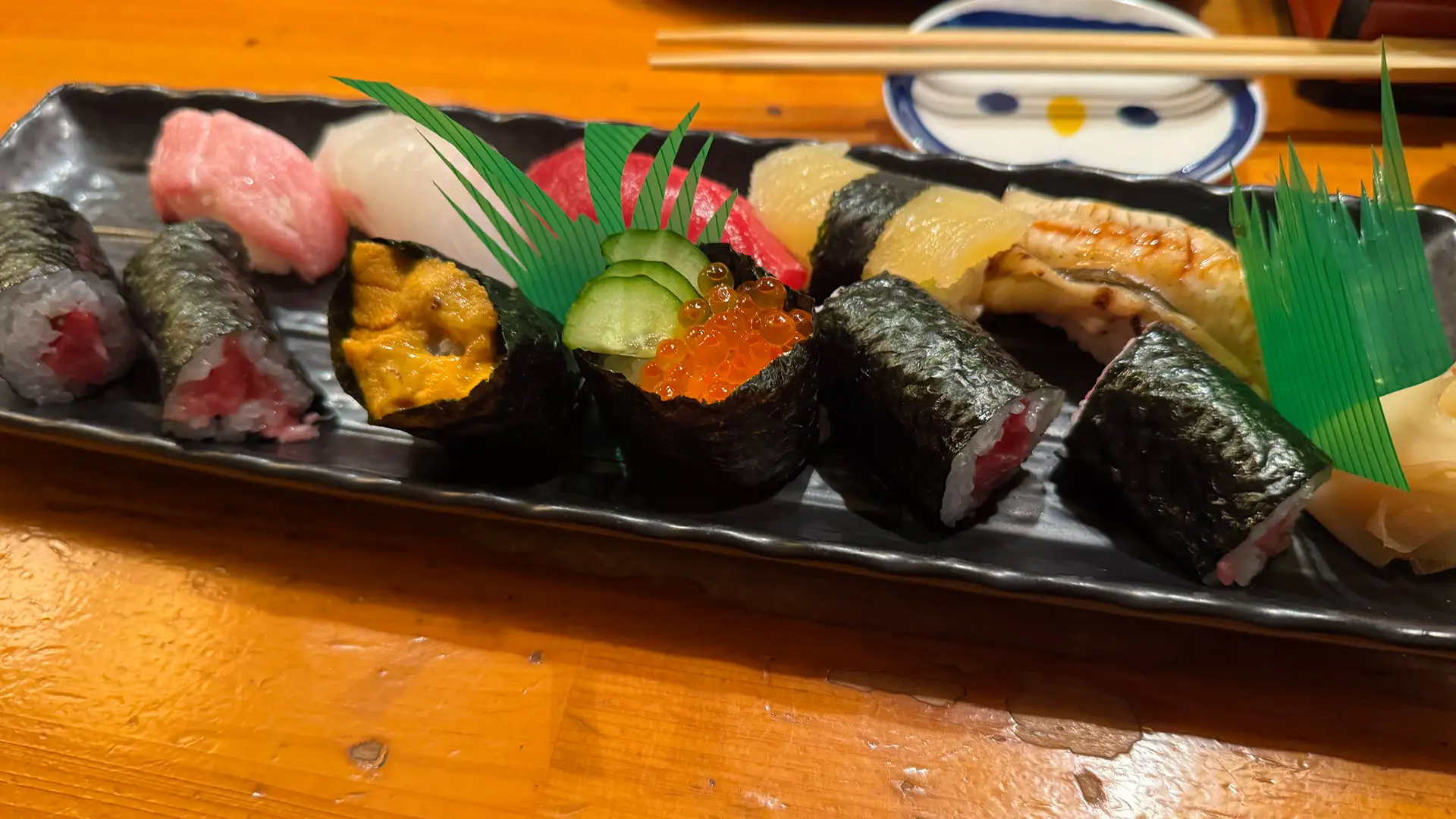
Opening a sushi menu and not knowing what to order? Or maybe you want to start making sushi at home but have no idea where to begin? This article explains every type of sushi you need to know, from the classic nigiri to the festive temaki. By the time you finish reading, you’ll know exactly what’s on your plate and which types you can make yourself tonight.
Most people think sushi means raw fish. That’s one of the biggest misunderstandings in food. Sushi is actually about the rice. The Japanese word su means vinegar, and shi (from meshi) means rice. So sushi literally means: seasoned rice. Everything you put on top, inside, or next to it determines the type. No fish? No problem. There are incredible vegetarian sushi types, as well as versions with egg, shrimp, or crab.
Want to know exactly what goes into sushi? Read our article what’s in sushi?

Nigiri is what most people picture when they think of sushi. It’s a small, oval-shaped ball of sushi rice, hand-pressed by a chef, with a slice of fish or other ingredient placed on top. Sometimes with a thin smear of wasabi underneath, sometimes held together by a thin strip of nori.
The name nigiri comes from nigirizushi, which literally means “hand-pressed sushi.” And that’s exactly what it is. A sushi chef shapes the rice with their hands into the perfect form. It sounds simple, but the technique is in the feel. The rice needs to hold together while still staying light and airy. Pressed too hard and it becomes dense and sticky. Too soft and it falls apart.
Popular nigiri toppings include:
My personal favorite? You can wake me up in the middle of the night for a lovely nigiri with otoro….the fatty belly part of the bluefin tuna. So delicious!
Want to make nigiri yourself? We have a clear and delicious salmon nigiri recipe ready for you. The foundation is covered in just 4 minutes.

Maki is probably the most widely eaten type of sushi in the world. It’s a roll of sushi rice and filling, tightly wrapped in a sheet of nori (dried seaweed) and then cut into equal rounds. Simple, flavourful, and endlessly versatile.
There are three variations within the maki family that you need to know:
Hosomaki is the thinnest version. One filling, one layer of rice, one sheet of nori. Small and precise. Think of the classic cucumber roll or the salmon roll.
Futomaki is the thick one. Multiple fillings, a thicker rice layer. More generous and festive. Ideal when you have guests over and want to impress.
Uramaki is the “inside-out roll.” Here the rice is on the outside and the nori is on the inside. This allows you to roll the outside in sesame seeds, tobiko, or other toppings. More on this one further down.
Want to know more about maki? Read our in-depth article what is a maki sushi?
Or dive straight in with this cucumber maki recipe. Three minutes of work, delicious results.

The uramaki deserves its own spot in this overview, because it looks completely different from a regular maki. In an uramaki, the nori is on the inside and the rice is on the outside. The result is an inside-out roll that you can coat with all kinds of things: sesame seeds, tobiko (fish roe), avocado slices, or thin slices of fish.
The most famous uramaki is the California Roll, made with crab meat (or imitation crab), avocado, and cucumber. This roll was invented in Vancouver, Canada, by Japanese chef Hidekazu Tojo in the 1970s, specifically for Americans who weren’t yet comfortable with raw fish. Now it’s one of the most popular sushi rolls worldwide.
Other well-known uramaki include the Dragon Roll, Rainbow Roll, and Philadelphia Roll.
Want to make a California Roll yourself? We’ve got a step-by-step recipe with full instructions ready for you.

Temaki is the most fun way to eat sushi. The word temaki literally means “hand roll.” A sheet of nori is rolled into a cone, then filled with sushi rice, fish, and vegetables. You eat it straight from your hand, point up. No chopsticks required, no formal fuss.
Temaki is perfect for a sushi night at home. Make a few different fillings, lay everything on the table, and let everyone roll their own cone. Guaranteed to be a great time. Nice (and safe!) to do with children as well.
Read everything about temaki in our article what is a temaki sushi?

The name gunkan means “warship” in Japanese. Take one look at it and you’ll immediately understand why. A small oval ball of sushi rice, wrapped with a strip of nori that sticks up above the rice. That raised edge forms a little cup, and that’s where the filling goes. Soft ingredients that you simply can’t place on top of regular sushi.
Think salmon roe (ikura), sea urchin (uni), tuna tartare, or small shrimp in sauce. The gunkan was invented at the legendary Kyubey restaurant in Tokyo in 1941. Since then, it has become an essential part of Japanese sushi culture.
Read all about gunkan in our article what is a gunkan?
Want to make one right now? Try our gunkan salmon roe recipe. Spectacular results, surprisingly straightforward.

Temari might be the most beautiful type of sushi that exists. Small, perfectly round balls of sushi rice, topped with a thin slice of fish, a leaf of vegetable, or a curl of egg. The name comes from temarizushi, a traditional Japanese decorative ball. And the comparison is spot-on. They look like little jewels. People really love making these during my live sushi workshop!
Temari is ideal for a special sushi evening or when you want to impress guests. They take a little practice, but the result is absolutely irresistible.
Read more about temari in our article what is a temari sushi?

Technically speaking, sashimi is not sushi. There’s no rice involved. It’s thin slices of raw, fresh meat or fish, carefully cut and served with wasabi, soy sauce, and pickled ginger.
Yet sashimi belongs in this overview, because sashimi and sushi go hand in hand. On a traditional Japanese sushi menu, sashimi always has a place. And making sashimi at home is a beautiful craft in itself.
The secret of great sashimi comes down to three things: the quality of the fish, the sharpness of the knife, and the direction of the cut. With a blunt or incorrectly used knife you can ruin the finest salmon. With a sharp Yanagiba, the traditional sashimi knife, you cut like a pro.
Want to know everything about sashimi? Read our article what is sashimi?
And if you want to make restaurant-quality sashimi at home, this ultimate guide is exactly what you need.
Chirashi means “scattered.” In a bowl of sushi rice, all kinds of ingredients are artfully arranged: thin slices of fish, shrimp, roe, vegetables, tamago (Japanese sweet egg omelette). It looks almost like a Japanese rice bowl, but with all the flavours of sushi.
Chirashi is popular in Japan as an everyday home meal, but also as a celebration dish on special occasions. And the best part? You don’t need a rolling mat. Just beautiful ingredients on delicious rice. Sometimes the simplest things are the most satisfying.

Beyond the classic types, certain rolls have taken over the world. Here are the most famous ones:
California Roll. The safe starter. Crab meat, avocado, cucumber, rice on the outside. Perfect for anyone who isn’t ready for raw fish yet. Make it yourself.
Dragon Roll. An uramaki with shrimp tempura on the inside and thin slices of avocado on the outside. That avocado gives it the look of dragon scales. Spectacular to make and eat.
Rainbow Roll. A California Roll as the base, topped with alternating slices of fish in all the colours of the rainbow. Salmon, tuna, white fish, shrimp. An absolute feast for the eyes.
Philadelphia Roll. Smoked salmon, cream cheese, and cucumber. No raw fish, rich and creamy. Hugely popular in the US and gaining fans fast everywhere else.
Spicy Tuna Roll. Tuna mixed with sriracha or another hot sauce, rolled in nori. Simple but with a beautiful kick.
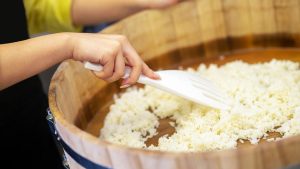
This is the foundation of everything. Great sushi rice makes or breaks your sushi. The rice needs to be sticky enough to hold together, but light enough not to taste heavy or gluey. And it needs to be perfectly seasoned with rice vinegar, sugar, and salt.
The most common beginner mistake? Too much or too little water, not rinsing the rice, or adding the vinegar too late.
We’ve laid out the 10 most common sushi rice mistakes in one clear article. Essential reading for anyone who wants to learn sushi.
Great question. If you’re a complete beginner, I recommend starting with maki. You’ll need a bamboo mat, a good knife, and a bit of patience. After your first two rolls, it already gets much easier. Guaranteed.
Gunkan is also surprisingly easy, because you only need to shape rice balls and wrap them. And for temaki you don’t even need a mat. Just roll and enjoy.
Want to know whether sushi making will be difficult for you? Read our honest article: is it difficult to make sushi yourself? The answer might surprise you.
What’s the difference between sushi and sashimi?
Sushi always contains seasoned rice. Sashimi is only raw fish or meat, without rice. So sashimi is technically not sushi.
How many types of sushi are there?
There are dozens of variations, but the eight essential types are: nigiri, maki, uramaki, temaki, gunkan, temari, sashimi, and chirashi. Everything else is a variation or a creative interpretation of these basics.
What is the best type of sushi?
That’s an opinion, not a fact. But ask any true sushi lover and many will say: a perfectly made nigiri. Pure, simple, and when done right, absolutely unforgettable.
How many pieces of sushi per person?
As a starter or side dish, count on 6 to 8 pieces. As a main course, 10 to 15 pieces. We’ve calculated this in detail in our article how many pieces of sushi per person?
Can I make vegetarian sushi?
Absolutely. Cucumber, avocado, sweet potato, shiitake, pickled vegetables, tamago (Japanese egg), edamame. Sushi is far less fish-focused in origin than most people think. Just try it.
What is tobiko?
Tobiko is the small, crunchy roe of the flying fish. You often see it as orange pearls on the outside of a roll or on top of a gunkan. It adds a satisfying crunch and a light, briny flavour. Read everything about tobiko here.
What is the etiquette for eating sushi?
There are a few unwritten rules, especially in more traditional or omakase settings. Want to know them before your next sushi date? Read our article on the 10 unwritten rules at an omakase sushi restaurant.
Reading is great, but making sushi is even better. If you want to learn step by step how to make every type at home, from the rice to the finishing touch, our online sushi course is exactly what you need. More than 50 videos, explained clearly, at your own pace. Whether you’re just starting out or already have some experience, there’s always something new in there for you.
Ready to roll? See you on the other side.
Rik Keijzer is the founder of School of Sushi and taught himself the art of sushi making from scratch. Now he helps people all over the world enjoy the finest Japanese culinary experience right in their own kitchen.

Sushi chef and founder of the School of Sushi. Making your own sushi is easier and more fun than you think! Through workshops and online courses, I’ll show you how to roll delicious sushi for your friends & family. Ready to roll?


Discover the 5 best electric knife sharpeners of 2025 for Japanese knives! Sharpen your Yanagiba and Santoku and slice sushi like a pro!

Our first Special Edition at Betuws Wijndomein was a huge success! Read about making sushi, Dutch wine, the tour, and new sushi & wine workshops.

What is Tobiko, where can you buy it and how many different types of Tobiko are there really? I explain it to you here!

Discover the enchanting sushi experience at ‘Kaizen Japanese Cuisine’ in Swiss Crans-Montana. Luxury, views, and culinary surprises in every bite!

Omakase Amsterdam is a new sushi restaurant in the Pijp area where the chef surprises you with refined Japanese flavors. Authentic, intimate and perfect for lovers of real sushi.

I tried Blue Sakura in Zwolle: all-you-can-eat sushi in an old church. Read on to find out if the nigiri and uramaki are worth the 3.7 stars.


Master the art of sushi-making at home with my fun online course, featuring 50+ step-by-step videos, expert tips, and delicious recipes to impress your loved ones!